
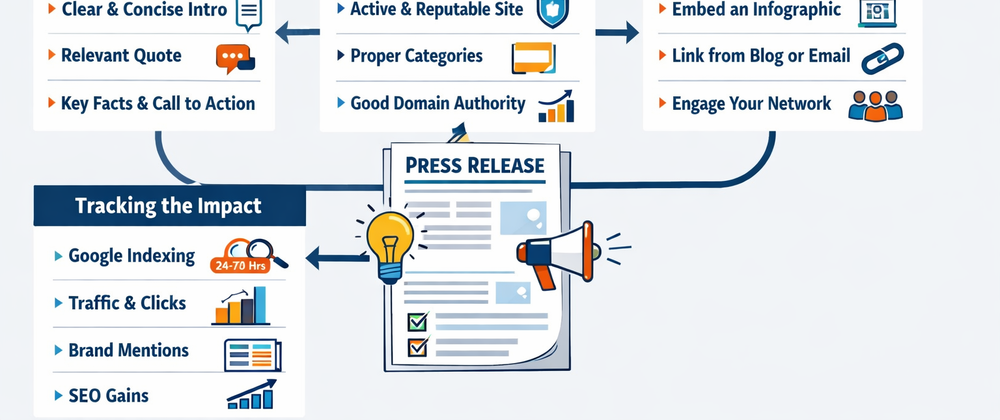

The submission of a press release ought to be easy. Post the announcement, press the publish button, and wait to be covered. However, in real life, everything is hardly so clean. The websites where press releases are submitted are associated with their own regulations, peculiarities, and presuppositions. The lack of a few details and even a good announcement may fade into the background.
Some of these errors recur with time. Some are obvious. Other people are a bit weird when you consider it. In any case, they can be avoided, and it will improve visibility, pickup, and general credibility.
Skipping the basics before hitting submit
This sounds simple, but it happens more than expected.
A press release gets uploaded without checking formatting, links, or even the headline length. Some submission platforms cut off headlines after a certain number of characters. Others reject releases with broken URLs or missing contact details.
Ever noticed how a release looks fine in a document but strange once published online?
That’s why reviewing the final preview inside the submission website matters. Not the draft. The actual preview. A missing space or awkward line break can change how editors scan the content.
Treating the platform like a dumping ground
A press release submission website is not a storage folder.
Uploading the same release to ten platforms without adjusting anything is a common habit. Honestly, it’s surprising how often this still happens. Each platform has its own audience, editorial tone, and content rules.
Some sites favor concise business news. Others lean toward product updates or local announcements. Submitting the same version everywhere sends a signal that care was not taken.
But here’s the thing… small tweaks matter. Adjusting the headline, reshaping the opening paragraph, or refining keywords can significantly improve results.
Writing for algorithms, not people
SEO matters. Everyone knows that. But over-optimizing a press release is one of the fastest ways to lose trust.
Keyword stuffing still shows up. Repeating the same phrase in every paragraph feels forced and unnatural. And editors notice it immediately.
It's kind of funny how chasing rankings often does the opposite.
Search-friendly press releases work best when keywords fit naturally into the message. One primary keyword. A few supporting terms. That’s enough. Clear language almost always performs better than clever tricks.
Ignoring the “About” section
The boilerplate section often gets rushed.
Sometimes it’s outdated. Sometimes it’s vague. Sometimes it’s missing altogether. That’s a problem. Editors use the company description to understand credibility, industry position, and relevance.
Why does this matter more than it seems?
Because when a journalist scans a release, the “About” section helps answer one key question: Is this source worth trusting? A weak or generic description doesn’t help.
Keeping this section updated, specific, and human-sounding builds confidence quickly.
Choosing the wrong category or tags
Most press release submission websites ask for categories, tags, or industry labels. This step is often treated like an afterthought.
Selecting “Technology” for everything might feel safe, but it reduces discoverability. Platforms use categories to route content to the right feeds, editors, and subscribers.
Not fully sure why this gets overlooked so often.
Choosing accurate categories improves targeting and increases the chance that the release lands in front of someone who actually cares.
Forgetting timing still matters
Press releases do not live in a vacuum.
Submitting major announcements late on a Friday or during a major news cycle lowers visibility. Some platforms have peak review times. Others update feeds only once or twice a day.
Anyway, timing is not about perfection. It’s about awareness.
Checking the platform’s publishing rhythm and planning submissions accordingly can quietly improve results without changing a single word of content.
Making it sound like an advertisement
This is a big one.
Press releases are not sales pages. Phrases like “best-in-class,” “revolutionary,” or “guaranteed results” trigger skepticism. Editors and readers tune out quickly.
A professional press release explains what happened and why it matters. It does not try to convince anyone to buy immediately.
Real-world media experience shows that straightforward announcements earn more trust than hype-heavy messaging.
Overlooking platform guidelines
Every press release submission website publishes content rules. Word limits. Link policies. Image requirements. Yet many submissions ignore them.
And then… rejection emails arrive. Or worse, silent suppression.
Following guidelines is not busywork. It signals professionalism. It shows respect for the platform and its audience. That alone can influence how content is treated internally.
Final thought worth sharing
The websites used to submit the press release are not shortcuts.
When careful, deliberate, and somewhat conscientious, they are good to work with. It does not involve sophisticated strategies and costly software in order to avoid the regular pitfalls. It entails detailing and understanding the working mechanism of media platforms.
Finally, a good press release is one that is easy to understand, has a point, and is human. Not due to its efforts, but due to paying due respect.



Top comments (1)
I'm going to purchase few press release backlinks for my client site acegaragestorage.com. What other factors I should consider before choosing sites for press release?