

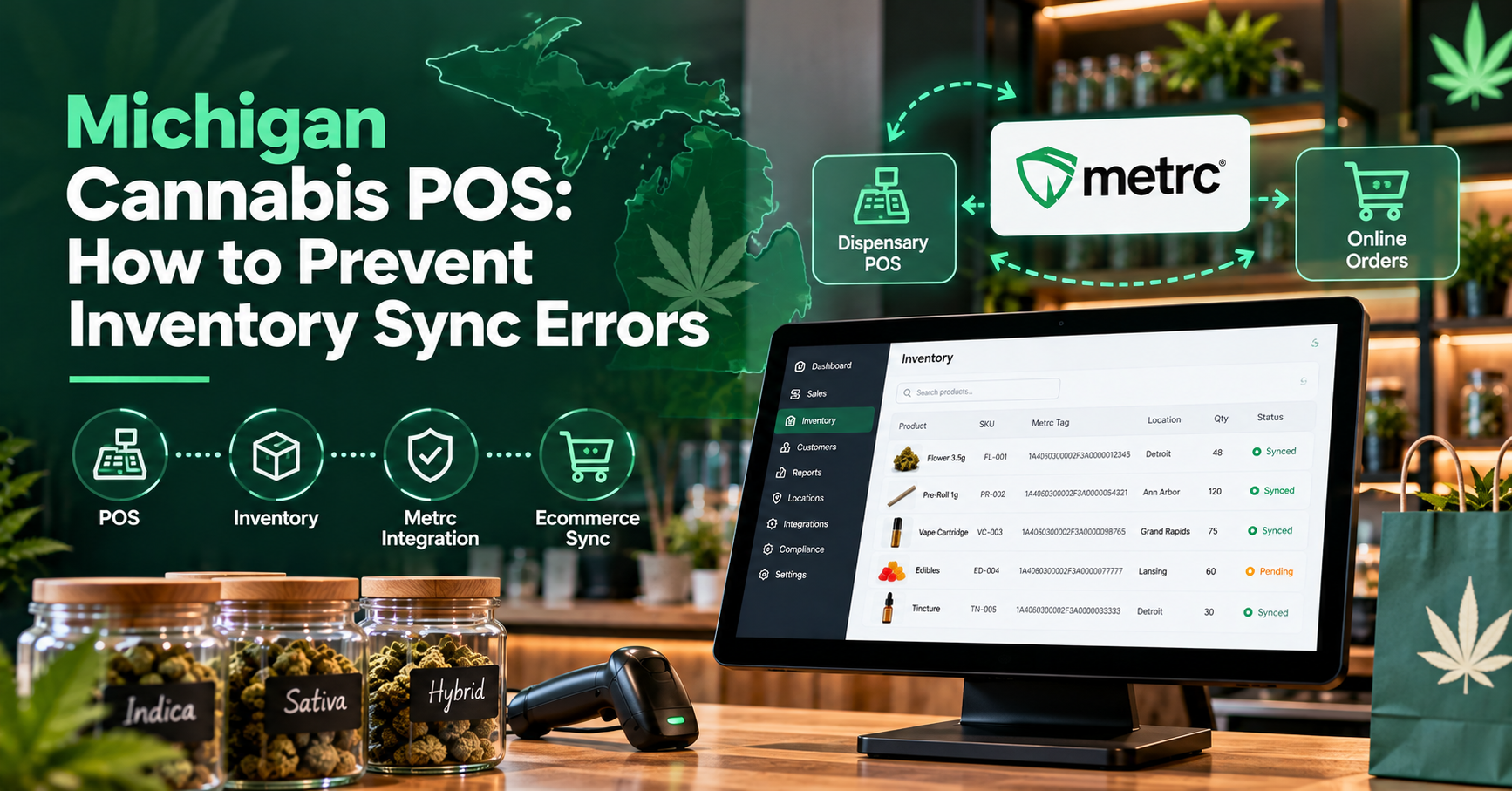
Accurate inventory management is essential for cannabis retailers operating in Michigan. Every regulated product must be properly tracked, from receiving shipments to completing customer transactions. However, inventory synchronization errors between point-of-sale systems, ecommerce platforms, and Metrc can create serious operational challenges. These discrepancies may result in inaccurate stock levels, delayed orders, reporting problems, and increased compliance risks.
A reliable Michigan dispensary POS platform helps retailers maintain consistent inventory records and streamline daily operations. Businesses evaluating a cannabis wholesale platform Michigan solution should also consider how product receiving, inventory transfers, and retail sales data interact. Accurate inventory synchronization depends on reliable technology, properly configured integrations, and consistent employee procedures.
This guide explains the most common inventory synchronization problems, how to prevent them, and which software features Michigan cannabis dispensaries should prioritize to maintain accurate records and efficient retail operations.
Why Inventory Synchronization Matters for Michigan Dispensaries
Cannabis inventory management differs from conventional retail because licensed businesses must maintain detailed records of regulated products.
Michigan's Cannabis Regulatory Agency (CRA) oversees the state's regulated cannabis market, while Metrc provides track-and-trace functionality for cannabis inventory.
A cannabis POS for Michigan dispensaries typically manages checkout transactions, product availability, pricing, and sales reporting. Metrc maintains regulatory inventory records.
How Inventory Systems Work Together
Depending on the software configuration, several systems may exchange information:
- POS software records retail transactions.
- Metrc tracks regulated cannabis inventory.
- Ecommerce platforms display available products.
- Inventory tools manage receiving and adjustments.
- Reporting dashboards consolidate operational data.
- Delivery systems coordinate eligible customer orders.
Problems arise when these systems process information at different times or interpret inventory changes differently.
A completed POS transaction does not necessarily mean every connected system has received and processed the corresponding update.
Retailers should understand how their integrations work and which system serves as the authoritative record for each type of information.
Common Causes of Cannabis Inventory Sync Errors
Inventory discrepancies rarely have a single universal cause. They may originate from software configuration, employee actions, delayed integrations, or incorrect product records.
1. Failed Metrc Synchronization
A POS system may successfully record a sale while the corresponding regulatory submission remains pending or unsuccessful.
Possible causes include:
- Temporary API connectivity problems.
- Authentication or permission errors.
- Invalid package identifiers.
- Incorrect transaction information.
- Integration processing delays.
- Software configuration changes.
When reviewing Metrc integration Michigan retailers should verify how their systems report failed submissions and whether unsuccessful transactions are automatically retried.
Never assume that a missing confirmation means a transaction was not received. Check its actual status before attempting another submission.
2. Incorrect Product and Package Mapping
Cannabis products may have similar names while belonging to different tracked packages.
If employees associate a product with the wrong package identifier, inventory deductions may affect an incorrect record.
For example, two batches of the same flower product may share a retail SKU but have different Metrc package tags.
A reliable dispensary POS system Michigan operators use should support accurate package-level inventory identification.
3. Ecommerce Inventory Delays
Online ordering creates additional synchronization requirements.
When an item sells in-store, its available quantity should be updated appropriately in connected ecommerce systems.
If updates are delayed, customers may order products that are no longer available.
This can lead to:
- Overselling.
- Canceled orders.
- Customer dissatisfaction.
- Manual inventory corrections.
- Additional employee workload.
A cannabis ecommerce platform Michigan retailers adopt should be evaluated for its inventory synchronization frequency, order reservation logic, and error notifications.
How to Prevent Inventory Synchronization Errors
Preventing discrepancies requires a combination of software configuration, employee training, and routine operational checks.
Step 1: Establish Accurate Product Records
Inventory synchronization begins with consistent product information.
Retailers should ensure that product records contain the correct identifiers, quantities, and package associations.
A practical verification checklist includes:
- Confirm product names and SKUs.
- Verify Metrc package identifiers.
- Check units of measurement.
- Review received quantities.
- Confirm product category assignments.
- Identify duplicate product records.
- Verify location-specific inventory information.
Accurate source data is the foundation of reliable synchronization across connected retail systems.
When receiving new inventory, employees should verify product details before making items available for sale.
Step 2: Monitor Metrc Integration Status
Integration monitoring helps retailers detect failed submissions before discrepancies affect larger portions of inventory.
Managers should regularly review:
- Pending sales submissions.
- Failed transaction notifications.
- API connection status.
- Package mapping errors.
- Unexpected inventory adjustments.
- Differences between POS and Metrc records.
Michigan seed-to-sale dispensary software may provide tools for reviewing transaction histories and integration errors.
However, the exact capabilities depend on the provider and configuration.
For regulatory guidance, retailers should consult the official Michigan Cannabis Regulatory Agency.
Software alerts are most useful when employees know who is responsible for reviewing and resolving them.
Step 3: Reconcile Inventory Regularly
Inventory reconciliation involves comparing quantities recorded in different systems with the products physically available.
Regular checks can reveal discrepancies before they become difficult to investigate.
Recommended Reconciliation Process
- Select the affected product or package.
- Compare POS inventory with Metrc records.
- Verify the physical quantity.
- Review recent sales and receiving activity.
- Investigate failed transactions or adjustments.
- Document the identified cause.
- Apply corrections through authorized procedures.
- Verify the resulting inventory balances.
Managers should prioritize products with frequent sales, recent adjustments, or previous synchronization problems.
Inventory adjustments should correct verified discrepancies, not simply make different systems display matching numbers.
Preventing Ecommerce and POS Inventory Conflicts
Retailers offering online ordering must coordinate product availability between their physical stores and digital sales channels.
A disconnected system can allow several customers to purchase the same limited inventory.
Use Reliable Inventory Reservation Rules
Businesses should determine when inventory becomes reserved for an online order.
Possible reservation points include:
- When an order is submitted.
- When employees accept the order.
- When products are prepared for pickup.
- When the transaction is finalized.
The appropriate approach depends on the software and business workflow.
Retailers should also establish procedures for canceled orders, abandoned carts, and unsuccessful transactions.
A dependable Michigan cannabis POS system should help employees understand which quantities are physically available, reserved, or already sold.
Test Synchronization Before Launching New Channels
Before enabling additional ecommerce integrations, conduct realistic tests.
Check whether:
- In-store sales update online availability.
- Online orders reserve inventory correctly.
- Canceled orders release inventory appropriately.
- Returns follow authorized inventory procedures.
- Product changes appear across connected systems.
- Failed updates generate visible notifications.
Testing exception scenarios is just as important as testing successful transactions.
Managing Inventory Across Multiple Dispensary Locations
Multi-location cannabis retailers face additional inventory challenges because each licensed establishment must maintain accurate records.
Centralized reporting can improve management visibility, but inventory ownership and regulatory tracking remain location-specific.
Multi-Location Inventory Best Practices
Businesses using multi location dispensary software Michigan should establish procedures for:
- Maintaining separate inventory records by location.
- Controlling employee access to inventory adjustments.
- Monitoring discrepancies at individual stores.
- Documenting authorized product transfers.
- Reviewing location-specific sales submissions.
- Standardizing receiving and reconciliation processes.
- Comparing inventory performance across stores.
A centralized dashboard may help regional managers identify unusual trends.
However, centralized visibility does not eliminate the need for accurate inventory records at each licensed facility.
Retailers should verify that transfers and other inventory movements follow current Michigan regulatory requirements.
Employee Training and Access Controls
Even reliable software cannot prevent every inventory mistake.
Employees must understand how checkout, receiving, adjustments, and returns affect inventory records.
Essential Training Topics
Dispensary training programs should cover:
- Correct product and package selection.
- Accurate receiving procedures.
- Recognizing synchronization warnings.
- Reporting unexpected inventory differences.
- Processing returns through approved workflows.
- Avoiding unauthorized manual adjustments.
- Escalating unresolved integration problems.
Role-based permissions can also reduce the risk of accidental changes.
For example, budtenders may need checkout access, while inventory adjustments require management authorization.
Clear responsibilities and consistent training help prevent small errors from becoming recurring operational problems.
Choosing the Right Michigan Cannabis POS Software
Not every cannabis retail platform for Michigan offers the same synchronization capabilities.
When evaluating IndicaOnline Michigan or competing solutions, retailers should focus on practical inventory workflows and transparent technical documentation.
Features Worth Prioritizing
A suitable platform should offer or support:
- Accurate package-level inventory management.
- Clear integration status notifications.
- Detailed transaction histories.
- Reliable ecommerce inventory synchronization.
- Configurable employee permissions.
- Inventory reporting by licensed location.
- Accessible technical support.
- Documented error recovery procedures.
Businesses should request demonstrations showing how the software handles failed submissions, incorrect package mapping, and canceled online orders.
A Metrc-compliant POS for Michigan should support applicable tracking workflows, but retailers remain responsible for accurate reporting and regulatory compliance.
The most valuable software is not simply the system with the longest feature list, but the one that makes inventory problems easier to identify and resolve.
Create a Daily Inventory Sync Checklist
A consistent daily review process can reduce the likelihood of unresolved discrepancies.
Recommended Daily Checks
- Review POS and Metrc synchronization status.
- Investigate failed or pending transactions.
- Verify recently received inventory.
- Check unexpected negative stock quantities.
- Review ecommerce inventory exceptions.
- Examine unusual manual adjustments.
- Document unresolved discrepancies.
- Assign corrective actions to responsible employees.
- Confirm that completed corrections are reflected accurately.
Managers should adapt this checklist to their transaction volume, software configuration, and regulatory obligations.
Routine monitoring is particularly valuable during busy periods when large transaction volumes can make errors harder to identify.
Final Thoughts: Keep Cannabis Inventory Accurate
Inventory synchronization errors can affect customer experiences, employee productivity, financial reporting, and regulatory compliance.
Michigan dispensaries can reduce these risks by maintaining accurate product records, monitoring Metrc integrations, reconciling inventory regularly, and testing ecommerce workflows.
Reliable dispensary software in Michigan can support these processes, but effective inventory management also requires trained employees and documented operating procedures.
The strongest prevention strategy combines accurate data, dependable integrations, routine reconciliation, and clear accountability.
By identifying synchronization problems early and correcting their underlying causes, cannabis retailers can maintain more reliable inventory records, reduce unnecessary administrative work, and support sustainable business growth.



Top comments (0)