

It's 2:47 AM. Somewhere, a server hiccups, a database connection pool maxes out, and a checkout page starts throwing errors for real customers with real credit cards. An alert fires. It lands on the phone of an engineer named Priya.
Priya, being human, is asleep. Her phone is on silent because her toddler finally stopped waking up at night and she wasn't about to jinx it.
This is the exact moment every incident management system is actually designed for, not the happy path where the on-call engineer springs awake, laptop already open, coffee already brewing. The real test is what happens in the silence after the first page goes unanswered. That silence has a name: escalation.
The Myth of the Single Responder
Most people outside of engineering assume "on-call" means one person, one phone, one line of defence. If that person is unreachable, the story ends there. The outage just... continues, unnoticed, until someone happens to check Twitter and sees customers complaining.
That's not paranoia, by the way. That's the pre-2010 default in a lot of companies. It's why a shocking number of early "web scale" outages ran for hours instead of minutes, not because the technology failed, but because the people process failed. Nobody had a backup plan for the backup plan.
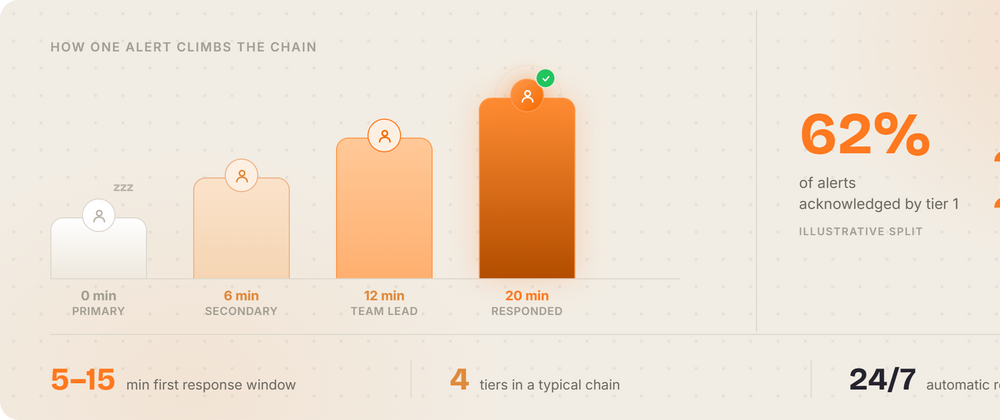
An escalation policy exists precisely to kill that myth. It says, in effect: no single human is a single point of failure. If Priya doesn't acknowledge the page in a set window (usually somewhere between 5 and 15 minutes), the system doesn't shrug and wait. It escalates on-call notifications automatically until someone responds.
Following the Chain
Think of an escalation policy less like a rulebook and more like a relay race where nobody knows in advance who's running which leg, only that someone will.
Here's roughly how that 2:47 AM page actually plays out behind the scenes, using a fairly typical automated escalation setup:
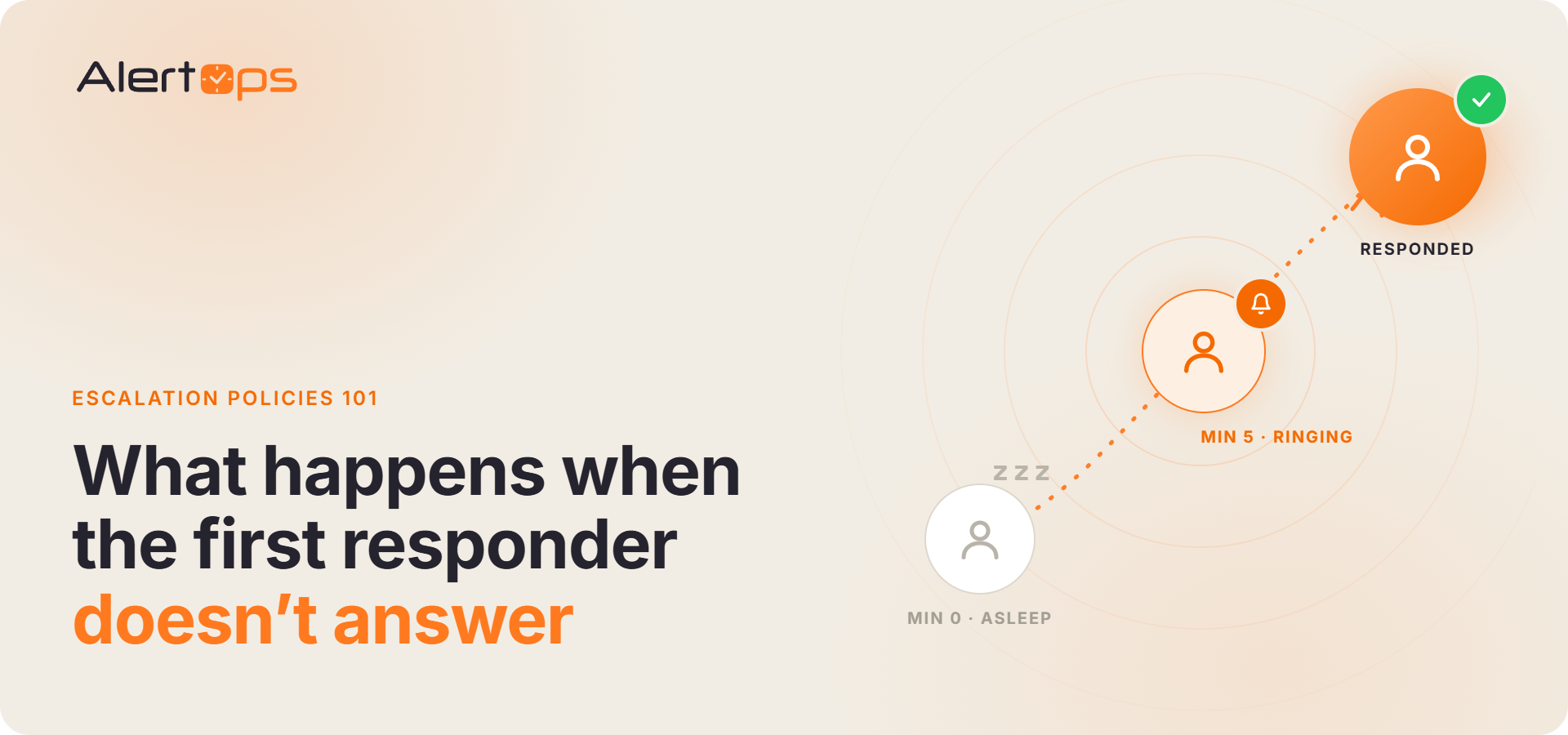
Minute 0. The alert fires. Priya gets a push notification, an SMS, and a phone call, usually in that order or all at once depending on the severity.
Minute 5-ish. No acknowledgment. The system notices. This is the quiet, unglamorous moment where good incident tooling earns its keep. It doesn't wait politely. It moves to the next name on the list.
Minute 6. Marcus, the secondary on-call engineer, gets paged as part of the on-call schedule's built-in redundancy. Maybe he's awake. Maybe he's not. Either way, the clock is still running, and a second, shorter timer starts for him too.
Minute 12. If Marcus is also unreachable, the policy climbs a level, often to a team lead, or to a wider "everyone on this team" blast that pages three or four people simultaneously instead of one.
Minute 20. If the chain gets this far, it usually trips something bigger: a manager gets notified, a status page might auto-update, and depending on severity, a completely different team might get pulled in as a fallback.
Somewhere in that climb, a human wakes up, sees the page, and the actual incident response finally begins. The point isn't that the first person failed. The point is that the system didn't need them to succeed, and that's what keeps mean time to resolution (MTTR) low even on a bad night.
Why This Feels Boring, and Why That's the Whole Idea
Escalation policies are one of those things nobody thinks about until the one night they desperately need one, and even then, they mostly notice it working in reverse, as in, they notice the outage that should have paged someone faster.
Good escalation design is invisible by nature. It's insurance. You don't admire your smoke detector; you just expect it to go off if there's smoke, and you're furious for exactly one specific reason if it doesn't.
That's why the best incident management teams treat their escalation policy the way pilots treat a pre-flight checklist, not as a formality, but as the thing standing between "handled it" and "front page news." They test it. They run drills where someone intentionally doesn't answer, just to watch the chain move. They ask uncomfortable questions: What if two people on the escalation path are at the same conference? What if the backup's backup just started maternity leave? What if the entire policy assumes everyone lives in one time zone, and half the team just moved to Lisbon? This is also where solid alert escalation best practices tend to separate the teams that sleep through outages from the ones that don't.
The Human Layer Nobody Talks About
Here's the part that rarely makes it into the documentation: escalation policies aren't really about technology. They're about trust.
When Priya sleeps through that first page, she's trusting that Marcus has her back. When the policy climbs past both of them, the team is trusting that leadership visibility kicks in exactly when it should, not a minute too late, not so early that every hiccup wakes up a VP. Get the timing wrong in either direction, and you either burn out your engineers with unnecessary 3 AM escalations, or you leave real outages to fester because everyone assumed someone else had it covered.
The best escalation policies are, in a strange way, an act of care. They protect the customer from downtime, sure. But they also protect the on-call engineer from the crushing, unspoken pressure of being the only thing standing between "minor blip" and "total meltdown." Nobody should have to carry that alone at 2:47 AM, and with the right on-call management and incident response tooling in place, nobody does.
The Real Takeaway
An escalation policy isn't a failure plan. It's a promise: that the system has more than one way to find a human being who can help, and that silence from the first responder is a scenario the design already expected, not a crisis in itself.
Priya wakes up around 3:10 AM to a text from Marcus: "Handled it, go back to sleep." She does. And that, quietly, is the whole system working exactly as intended.
If your own team is still relying on a single phone number and good intentions, it might be worth looking at how a dedicated AI-powered incident management platform handles escalation, on-call scheduling, and automated escalations end to end, so the next 2:47 AM page doesn't depend on any one person being awake to answer it.
Ready to build an escalation policy that never leaves an alert stranded? Visit AlertOps to see the platform in action, or follow AlertOps on LinkedIn for ongoing tips on incident response, on-call management, and reducing MTTR.



Top comments (1)
Curious how your team's escalation policy would hold up at 2:47 AM? We do free walkthroughs where we map out your current on-call setup and show the gaps before they become an incident. Grab a demo slot here — no pitch, just a look under the hood.