
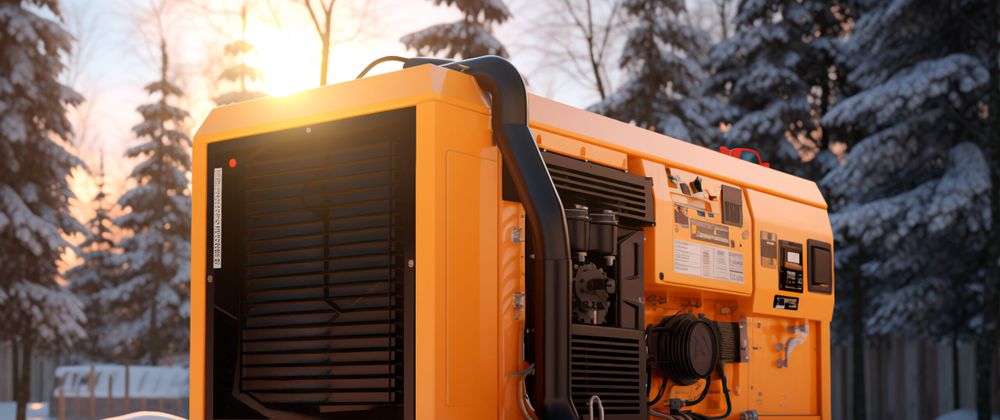

You’ve probably seen these things sitting behind hospitals or data centers—big, heavy metal boxes that just look like they mean business. In 2026, where we can’t even go ten minutes without checking a phone or a server, that "always-on" power isn't just a nice-to-have; it's the baseline. While everyone talks about batteries, the old-school diesel engine is still the one we call when things get serious. It’s not just luck that these machines can run for 30 years. It’s because they’re built like tanks. If you want to dig into the actual torque specs or see the raw kVA numbers for the newest 2026 industrial sets, you can click here to see how the heavy-duty stuff is put together.
So, why does a diesel unit outlast almost everything else in the industrial world? It comes down to some very deliberate—and very expensive—engineering choices.
They’re Built for the "Big Squeeze"
A diesel engine doesn't have spark plugs. It relies on raw, violent pressure to fire. To get the fuel to ignite, the engine has to squeeze the air so hard it gets hot enough to melt lead. Because of that constant internal pounding, you can't build these engines out of the same lightweight aluminum found in a car.
Engineers use Compacted Graphite Iron (CGI) for the blocks. This stuff is dense and incredibly rigid. It doesn't warp or flex when the cylinders are under pressure. The whole "spinning assembly"—the crankshaft and the rods—is oversized. They’re chunky by design. This extra mass absorbs the vibration and the heat, preventing the tiny "stress fractures" that usually kill lighter engines long before their time.
The "Slow Down" Advantage
In engineering, speed is usually a shortcut to a breakdown. Your car engine screams along at 4,000 or 5,000 RPM just to keep up with traffic. A professional generator? It’s a low-speed beast. Most of them are locked at exactly 1,500 RPM or 1,800 RPM.
Think about it: every time a piston moves up and down, it’s a "friction event." Because a generator runs at roughly half the speed of a car engine, it’s basically doing half the work to produce the same result. Over a few thousand hours, that's millions of fewer scrapes against the cylinder walls. It’s the difference between a sprinter and a power-walker; one burns out in minutes, the other can go all day.
Piston Jets and Heavy-Duty Oil
Heat is the silent killer of any machine. In 2026, we’re seeing smarter cooling, but the real secret is underneath the pistons. High-end units have dedicated Oil Cooling Jets. These are small nozzles that spray a constant stream of oil directly onto the bottom of the pistons while they’re moving.
This does two jobs at once. It keeps the metal from getting soft and "mushy" under the heat of the explosion, and it keeps the joints perfectly greased. Since diesel fuel itself is actually quite oily (unlike gasoline, which is more like a cleaning solvent), the top of the engine stays lubricated from the fuel side, while the bottom stays cool from the oil side. It’s a double-layered defense that keeps the metal-on-metal wear to a minimum.
No Belts, Just Gears
If you’ve ever had a timing belt snap in a car, you know it’s basically a death sentence for the engine. Industrial engineers don't play that game. In a heavy-duty 2026 generator, you won't find rubber belts or even thin metal chains inside the timing system.
Instead, they use Steel Gear Trains. The crankshaft and the camshaft are literally locked together by heavy, interlocking gears. There’s nothing to stretch, nothing to snap, and nothing to "slip." You don't "service" a gear train; you just let it do its job. It ensures the engine timing stays perfect for the entire life of the machine, whether that’s five years or fifty.
The "Forever Engine" (Wet Sleeves)
This is the coolest bit of engineering in the whole unit. In a cheap motor, the pistons rub directly against the engine block. If the wall gets scratched, the block is trash. But in a real industrial diesel, each cylinder is a separate, removable steel tube called a Wet Sleeve.
Better Cooling: These sleeves sit directly in the "bath" of the engine's coolant, so they shed heat way faster than a solid block.
Rebuildability: If a cylinder ever gets worn out, a mechanic doesn't throw the engine away. They just pull out the old sleeve and drop in a new one. It makes the engine "infinitely rebuildable." You’re buying a piece of infrastructure, not a disposable toy.
Smart Health Checks
Even with all that heavy iron, 2026 has brought some tech to the party. Modern control panels now use Predictive Maintenance sensors. They don’t just wait for something to break; they listen to the vibrations of the engine. If a bearing starts to hum at a weird frequency, the system flags it weeks before it actually fails. This means you can fix a small problem during a scheduled check-up instead of having a total collapse in the middle of a storm.
The Bottom Line
A diesel generator is durable because it’s a throwback to when things were built to last, just updated with 2026 brains. It’s heavy iron, slow speeds, and a design that assumes you’ll want to fix it rather than replace it. When the lights go out and the wind is howling, that's exactly the kind of over-engineered reliability you want sitting in your yard.



Top comments (0)