

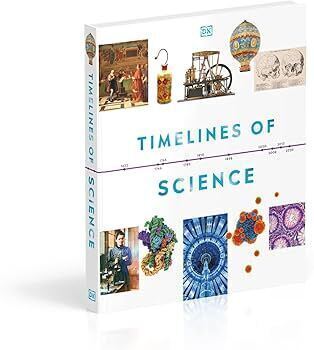
 Timelines of Science: A Journey Through Human Discovery and the Circumference of Earth
Science has shaped the way we understand the world for thousands of years. Every discovery, invention, and breakthrough has built upon the knowledge of previous generations, creating a fascinating timeline of human progress. From ancient civilizations observing the stars to modern scientists exploring distant galaxies, the story of science is one of curiosity, innovation, and continuous learning.
One of the most remarkable achievements in early science was measuring the circumference of Earth. Long before satellites and GPS technology existed, ancient scholars used mathematics and careful observations to estimate the size of our planet with surprising accuracy. This milestone represents just one chapter in the incredible timelines of science that continue to inspire researchers today.
What Are the Timelines of Science?
The timelines of science refer to the chronological sequence of important discoveries, inventions, theories, and technological advancements that have shaped our understanding of the natural world. These milestones span thousands of years and cover fields such as astronomy, biology, chemistry, physics, medicine, mathematics, and environmental science.
By studying scientific timelines, we can see how one discovery often leads to another. Scientific knowledge is not created overnight—it grows step by step as researchers build upon previous work.
Ancient Science: The Beginning of Discovery
Science began long before modern laboratories existed. Ancient civilizations carefully observed nature to improve farming, navigation, medicine, and construction.
Some important achievements include:
Developing calendars based on the movements of the Sun and Moon.
Creating early mathematical systems.
Recording astronomical observations.
Practicing herbal medicine.
Building remarkable engineering structures.
These early contributions laid the foundation for future scientific discoveries.
Around 240 BCE: Measuring the Circumference of Earth
One of the greatest moments in scientific history came when the Greek scholar Eratosthenes estimated the circumference of Earth.
By comparing the angles of sunlight at two different locations during the summer solstice, he calculated Earth's size with remarkable precision using only geometry and observation. His estimate was surprisingly close to modern measurements, proving that careful scientific thinking could solve complex problems.
Today, the accepted circumference of Earth is approximately:
40,075 kilometers (24,901 miles) around the equator.
40,008 kilometers (24,860 miles) around the poles.
This achievement remains one of the greatest examples of ancient scientific reasoning.
The Middle Ages: Preserving Knowledge
During the Middle Ages, scholars in different parts of the world preserved and expanded scientific knowledge.
Important developments included:
Improvements in astronomy.
Advances in medicine.
Mathematical innovations.
Better navigation techniques.
Translation of ancient scientific texts.
Many discoveries from this period later influenced the scientific revolution in Europe.
The Scientific Revolution
Between the 16th and 18th centuries, science experienced dramatic growth. Scientists began relying more on experimentation and observation rather than tradition.
Major milestones included:
The Heliocentric Model
Scientists demonstrated that Earth revolves around the Sun instead of the Sun revolving around Earth.
Laws of Motion
The understanding of motion transformed physics and engineering.
Development of the Telescope
Improved telescopes allowed astronomers to observe planets, moons, and distant stars with unprecedented detail.
Scientific Method
Careful observation, experimentation, and evidence became the standard approach for scientific research.
These changes permanently transformed the way humans investigated nature.
The Industrial Revolution
The Industrial Revolution accelerated scientific progress by connecting research with practical applications.
Important innovations included:
Steam engines
Modern factories
Improved transportation
Better communication systems
Mechanical engineering
Scientific discoveries increasingly improved everyday life.
Modern Science in the 20th Century
The twentieth century witnessed extraordinary advances across nearly every field of science.
Some landmark achievements include:
Space Exploration
Humans launched satellites, landed astronauts on the Moon, and explored planets using robotic spacecraft.
Medical Breakthroughs
Vaccines, antibiotics, medical imaging, and organ transplants dramatically improved global healthcare.
Computer Technology
The invention of computers revolutionized scientific research, communication, and education.
Genetics
Scientists decoded DNA and greatly expanded our understanding of heredity and human biology.
These discoveries continue to shape modern society.
The Digital Age and Artificial Intelligence
Today's scientific timeline includes rapid progress in digital technologies.
Current areas of research include:
Artificial intelligence
Quantum computing
Renewable energy
Climate science
Robotics
Biotechnology
Space exploration
Scientists collaborate globally using powerful computers and advanced research tools to solve some of humanity's greatest challenges.
Why the Circumference of Earth Still Matters
Although modern satellites can measure Earth with incredible precision, the circumference of Earth remains an important scientific concept.
Understanding Earth's size helps scientists:
Calculate global distances.
Design accurate maps.
Plan satellite orbits.
Study climate systems.
Navigate ships and aircraft.
Explore space missions.
The measurement also demonstrates how mathematics and observation work together in scientific discovery.
Science Builds on Earlier Discoveries
One fascinating aspect of scientific timelines is that each generation benefits from previous knowledge.
For example:
Ancient astronomers inspired modern space research.
Early mathematics supports modern engineering.
Classical physics led to advanced space technology.
Historical medical research paved the way for modern healthcare.
Science is a continuous journey where every discovery becomes a stepping stone for future innovation.
How Scientific Timelines Help Students
Learning the timelines of science offers many educational benefits.
Students gain:
A better understanding of historical events.
Appreciation for scientific thinking.
Knowledge of famous discoveries.
Inspiration to pursue STEM careers.
Critical thinking and problem-solving skills.
Studying history alongside science makes learning more meaningful and engaging.
Future Milestones in Science
The timeline of science is far from complete. Future generations may witness discoveries that seem impossible today.
Researchers are currently working on:
Finding life beyond Earth.
Developing clean energy technologies.
Creating more powerful quantum computers.
Advancing personalized medicine.
Exploring Mars and beyond.
Understanding dark matter and dark energy.
These future breakthroughs will become new milestones in humanity's scientific journey.
Science and Everyday Life
Scientific discoveries affect our daily lives in countless ways. Smartphones, GPS navigation, weather forecasting, clean drinking water, electricity, transportation, and modern medicine all exist because of centuries of scientific progress.
Even understanding concepts like the circumference of Earth has practical applications in navigation, aviation, satellite communication, and global positioning systems. It reminds us that knowledge gained centuries ago continues to support today's advanced technologies.
Conclusion
The timelines of science tell an inspiring story of curiosity, observation, experimentation, and discovery. From ancient civilizations measuring the circumference of Earth to modern researchers exploring distant galaxies, each scientific achievement has expanded humanity's understanding of the universe.
As technology continues to advance, the scientific timeline will grow with new discoveries that improve our lives and deepen our knowledge of the natural world. By studying the past, we gain valuable insights that help shape the future, ensuring that the spirit of exploration and innovation continues for generations to come.



Top comments (0)